The Mekong River: Threats to a unique human-ecosystem | South East Asia

PastedGraphic-4

The Mekong River is unique among the world’s great rivers in the size of the human population supported by its ecosystem. Approximately 60 million people derive their livelihoods from aquatic life in the river system. Largely unregulated through most of the 20th century, the Mekong River system is undergoing extensive dam construction throughout the basin for hydroelectric generation, with over 140 dams planned, under construction, or built. What will be the cumulative effects of these dams on the geomorphology, ecology, and human populations of the river and its delta? How will these changes interact with other changes such as deforestation in steep uplands, levees and channelization, and accelerated sea level rise?

Small-scale Farmers: Sources of “Buen Vivir” | Mexico

PastedGraphic-3

With the premise that human Buen Vivir is holistic and includes individual, communitarian and environmental aspects. Ana and a group of small-scale agro-ecological farmers of a nested farmer’s market in Chiapas, Mexico have put together a series of qualitative indicators. These were used to assess how selling in a nested farmer’s market contributed to their Buen VivirThe Buen Vivir elements of the nested market were compared to other types of market outlets, such as conventional produce markets or door-to-door sales.

The results drawn from this research suggested that nested markets have more elements associated with Buen Vivir than conventional markets, such as emotional rewards and social recognition. Nevertheless, these markets also present challenges, such as low profits and discomforts related with social interaction. In the end, this research shows that the assessed nested markets have the potential to fulfill human necessities. social interaction. In the end, this research shows that the assessed nested markets have the potential to fulfill human necessities.

Strengthening nested markets can have beneficial impacts in the Buen Vivir of agroecological famers because they are sale outlets and they contribute to the sustainability of their agroecological production model.

Sustainable Tourism and Its Discontents | Honduras

PastedGraphic-1

Is an equitable sustainable tourism model possible, and if so how can it be implemented in a way that promotes the rights of indigenous and afro-descendant peoples? Examining the discourse and practice of sustainable tourism development on the Caribbean Coast of Honduras. Demonstrating the ways in which the Honduran state, international financial institutions (IFIs) and private tourism investors utilize the language of sustainability to promote tourism development projects that are ecologically destructive, and which threaten the territorial rights and autonomy of coastal peoples, especially the Garifuna.

“Sustainability Experimentation Venture Network” (SEVeN)

PastedGraphic-3 Humans have been adapting to changing environments since inception. Environmental changes were generally slow on a geological time scale, making oral traditions sufficient for transferring knowledge about successful adaptation experiments. Anthropogenic climate change is occurring faster than the best predictions of even just three years ago. Adaptation, therefore, must be swift. Yet no formal, systematic mechanism exists for documenting and aggregating the results of both failed and successful adaptation experiments. Nor does a mechanism exist, for disseminating this knowledge. This talk will introduce the Sustainability Experimentation Venture Network (SEVeN), a concept for producing, aggregating and disseminating knowledge related to sustainability experimentation broadly and climate adaptation specifically. The talk will engage the audience in a collaborative process of identifying the ideal parameters for SEVeN. For example, what qualifies as a “sustainability experiment?” What is the ideal scale of the sustainability experiments that should be documented? What are the key variables for which data should be collected (e.g., cost, speed of implementation, level of technical knowledge required, etc.)?

Urban Growth, Heterogeneity and Activism in Mexico’s Cities | Mexico

PastedGraphic-1

Most often, sustainability is associated with questions pertaining to the natural environment or, in the urban context, with ways to mitigate the problems associated with rapid demographic growth and its associated troubles. But how might the concept of sustainability help us frame questions of racial, ethnic and cultural belonging in today’s rapidly expanding urban centers in the Global South? How is the articulation of ethnic and cultural identities amongst the growing urban indigenous population in Mexico a matter of sustainability? This talk will examine the experiences and mobilizations of Wixárika indigenous youth who are living, studying, and working in Mexico’s western cities of Guadalajara and Tepic. My ethnographic and archival research explores state and popular perceptions of racial belonging in these two cities and the challenges these imaginaries face. Specifically, this talk will discuss the ways that Wixárika university students and young professionals negotiate these perceptions, increasingly through forms of activism that assert the rights of indigenous people to be heterogeneous urban citizens. These acts of activism and visibility on university campuses, government buildings and private offices manifest a push away from observing racial alterity in cities as a relation of “negative difference” to one of “positive heterogeneity.”

Traditional Is Modern: An environmentally sustainable approach to earthquake-resistant construction | India, Pakistan, Afghanistan, and Iran

PastedGraphic-1

Traditional construction and vernacular architecture in earthquake areas. By focusing on traditional examples of earthquake resistant construction. Showing evidence of how one of the most extreme environmental forces to which buildings may be subject to can provide a fulcrum for understanding differences between indigenous traditional buildings and post-industrial construction using steel and concrete, now perceived as “modern.” The examples are based on experience from India, Pakistan, Afghanistan, Turkey, and Iran, as well as in Italy, Portugal, Haiti and Central America.

Can Africa survive the current food system crisis? | Africa

UntitledIntroducing the debate around the issue of systemic crisis of global food system in relation to global hunger, climate change, and sustainability; particularly, its ramifications on the African people and continent. Moreover, it is crucial to shed lights on three folds: (a) the political question of huger and food distribution, (b) the debate around the food system and climate change vis-à-vis land grabs which will include examination of large scale food production, and (c) alternative solutions of the current food system that rural farmers and social movements advocating for.

A Systems Science Approach to Building Sustainable Low-Carbon Economies

A very clear scientific message has emerged from the work over the past decade on climate science and anthropogenic greenhouse gas emissions: reduce the environmental burden by roughly 90% in 3 – 4 decades. This target requires a complete ‘reboot’ of how energy and economic systems are envisioned and implemented. Beyond a needed tighter relationship between life-cycle energy costs and benefits, and beyond an also necessary true integration of social science and behavioral research,  the social and environmental impacts of energy systems must become the crux of the development and deployment process.  To do this, working examples at all scales will be needed.  In this talk, we explore viable, transformative examples of this reconfiguration from household to national and regional scale.


Global South & Global North

Picture3

Can the global South one day improve in partnership with the global north or this will only happen with a radical shift in the entire world capital and power structure?

By Prof. Ahmed El Kholi, (Professor of Geography, Regional Economies, Urban & Regional Planning)

Your question is not simple, but I will attempt to answer. I think that industrialized, advanced societies are more organized than developing south societies. They have the tools to defend their interests, such as monopolizing decision-making worldwide via institutions they control such as IMF, World Bank , UN, etc. They shifted from the modern industrial mode for capital accumulation to a postmodernist flexible financial capital accumulation. Not just controlling the global process of decision making, but also the means to finance it. They control Research and Development, and deprive developing countries of the experience and knowledge of their scientists, alias, brain drain. They install Muppet-leaders and nurture a class of elite within countries of the south to promote their agenda and facilitate the continuous processes of exploiting the South. They have the military power and the international support to back their move, Remember invading Iraq. They also control media and means of forming preferences and shaping people’s conscience. Based on the aforementioned, the answer is NO, No Way the North and South will be partners. Partnerships are between equals, and the North always is superior to the South. Will the South prevail? the answer is Yes. For several reasons, first, the pressures within developing countries will spark movements and call for reform. Second, advanced industrial societies have ther own internal issues and problems. Their population are declining, they need the labor, but they are against immigrants. Those immigrants and their children will transform these societies. The demographic force will prevail. Countries,m such as Egypt , Turkey, India, China and Brazil will turn to be regional powers because of their population size. Transforming both the North and South to engage in global partnership will take place once the people come to power and control their destiny. The way is a popular socialist democracy that takes place in both developed and developing countries. This is not a wish, nor a prophecy; rather it is the inevitable.

Red Sea: From Mass-Tourism to Ecotourism | Egypt

___024_24A.JPG

The Red Sea is a very unique resource that is not yet being utilized to its full potential. Since 1980s till today the mass tourism has destroyed large areas of coastal stretches of the northern Red Sea region and the city of Hurghada is an example for such environmental deterioration.

Innovative initiatives have taken place in order to protect the remaining parts of the red sea (From Marsa Alam city to South) including several guidelines by the Red Sea Sustainable Tourism Initiative (RSSTI) in 2000-2004 that focused on developing ecotourism and coastal planning for the region, followed by another pilot programme named Livelihood and Income From Environment (LIFE) in 2005-2008 which supported implementing pilot projects in national parks to demonstrate examples of the appropriate process. Since 2008 to date there has been several initiatives to introduce sustainable practices (i.e. Solid Waste Management, Mooring Buoys,..and other practices) lead by local NGOs such as HEPCA.

Despite all these attempts, the development pattern did not change much and the knowledge gained remains within a limited number of people, the main obstacles are: (i) An intuitional problem where the responsible authorities (both tourism and environment ministries) do not coordinate especially with such complexity of stakeholders, (ii) Practitioners are more inclined to utilize the Nile Valley architecture as the local and appropriate one for the Red Sea, and (iii) The lack of the understanding of the Red Sea system (i.e. drainage, soil, marine life,…and habitat) resulted to several inappropriate land subdivisions and allocating development in vulnerable areas

The solutions for such complex problems can be summarized as follow:

(i) Elevate the planning exercise above the ministry level, where planning is not limited to one ministry (housing, tourism, … and environment) that has a very specific mandate and will encourage mono-type of development, but rather an over arching exercise that is a product of a higher level proposed committee on the prime-minster level.

(ii) Improving the education (mainly architecture and planning) to incorporate appropriate planning tools and building technologies and not limit this arena to the Nile Valley architecture. Learning from the local tribes knowledge about best site selections criteria and building styles. Seeking guidance from relevant experiences in the region rather than copying western countries

(iii) Need for suitability land use maps that can guide development in the region without harmful intervention to the environment and being locally implementable within the local market dynamics

Also posted on the Berkeley Tourism Studies Working Group, (part of TSWG colloquium): http://www.tourismstudies.org/MiddleEast2013.htm 
Public spaces cause Regression or Progression!

PastedGraphic-1

Karachi Clifton Beach 1960s

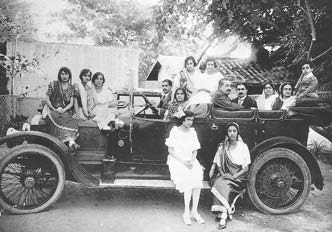
The good thing about social sites is that history, in one form or the other, is becoming more accessible to all. For example, people share decade old pictures of families and cities or advertisement via facebook or chain emails. These snippets from history give one a quick glimpse into the cultural and social fabric of that time. By this I don’t mean that by mere looking at pictures and adverts one can get a full understanding of societies. Nevertheless, these tiny doses of information do provide a window into the societal norms and prevalent cultures of that time. Looking at such images of Cairo and Karachi during the 60s and 70s, It was interesting to observe the extent to which these societies have regressed or progressed in terms of inclusiveness, diversity of religions, cultural norms, fashion, gender sensitivity, civic sense, and in their overall social thinking since then. The definition of modernity would of course vary depending upon which side of the fence you are looking from. However, there is hardly any debate on the fact that societies across the globe are increasingly becoming divided on the basis of religion and ethnicities. Besides many other reasons for such state of affairs, lack of public places and mixed-use physical spaces are some of the important reasons that play a direct role in creating polarization. Open spaces for recreation in big metropolises across the developing world are diminishing and as a result there is a growing tendency for violence amongst youth as a means to self expression. Karachi, once called the Paris of Asia, is now bracketed with war torn countries like Afghanistan and Iraq. Though, Cairo may not yet be there, but the way things are happening there, the times may not be too far. The deterioration in law and order results in gated communities and mixed use spaces become sparse. It is often seen that public spaces suffer neglect and results in abandonment when the affluent classes do not frequently visit such places. So, to what extent can we say that a lack of public spaces in mega cities leads towards regression in society? Is the current pattern of development sustainable?

A woman riding a motorbike in Karachi 196

PastedGraphic-3

           A Parsi family residing in Karachi during the 50

By: Unjela Kaleem