Sustainability Debate – The Greens

slide3

The Greens see the world primarily in terms of ecosystems, and thus concentrate on depletion, damage, pollution, and population growth. They focus on carrying capacity and want to bring about better under- standing of how large the economy can grow before it outstrips its host. Their policy focuses on how many and how much, the number of people, and the amount of impact each person can have upon the environment. Greens are not usually technophobes; most see technology as an important tool to reduce human impact. More recently, some have become interested in free-market mechanisms, and want externalities presently borne by society to be fully integrated into producer costs and consumer prices so that markets become, in David Korten’s phrase, “mindful.” The Greens, and to some extent the Reds, host bigger tents in that they hold a bolder and broader diversity of views. But this also keeps them splintered and self-canceling, as Greens tend to unite their enemies and divide their friends, a good formula for political failure. They are often portrayed as caring less for people than animals, more about halogenated compounds than waterborne diseases.

After participating in the debate and hearing all the different views, arguments, propositions, counterarguments and the overall feedback:

(1) Summarize in 400 words what makes the new project of the Pink Lake City in Senegal a sustainable one according to the value system of the Greens.

(2) Write another 400 words on issues that the city plan fails to address according to the value system of the Greens.

(Sustainable Development in Cities, USP 514 Class Discussion)

#Sust_Glob_South

Sustainability Debate – The Blues

slide2

The Blues are mainstream free-marketers. Such people have a positive bias toward the future based on technological optimism and the strength of the economy. They are armed with a strong statistical case, based on the vigorous and dynamic economies of Western and (until1998) Asian nations. Their approach is deeply rooted in conventional economics, and their number-crunching reveals a world vastly improved and rapidly ascending. Blues believe that reliance on innovation, investment, and individual freedom will ensure a shining future for humankind, and a level of material well-being that has strong appeal to virtually everyone in the world. Their optimism also extends to the environment, believing that in most cases, markets will send strong and appropriate price signals that will elicit timely responses, mitigating environmental damage or causing technological breakthroughs.

After participating in the debate and hearing all the different views, arguments, propositions, counterarguments and the overall feedback:

(1) Summarize in 400 words what makes the new project of the Pink Lake City in Senegal a sustainable one according to the value system of the Blues.

(2) Write another 400 words on issues that the city plan fails to address according to the value system of the Blues.

(Sustainable Development in Cities, USP 514 Class Discussion)

#Sust_Glob_South

Sustainability Debate – The Reds

slide4

The Reds represent the sundry forms of socialism. Although one might expect them to have been discredited by the downfall of the Soviet Union, their worldview is very much alive. They find validation in the chaotic and horrific economic conditions that the rise of bandit capitalism has brought to contemporary Russia, a country whose economic machinery now benefits a minority at the expense of a materially and socially disadvantaged majority. The growing and worldwide gap between rich and poor confirms the Reds’ analyses, which are as accurate about poverty and suffering as the Blues’ observations are accurate about growth and change. While Blues focus on the promise of growth and technology, Reds focus on its shadow and try to discern its root causes. They view labor—one aspect of human capital—as the principal source of wealth and see its exploitation as the basis of injustice, impoverishment, and ignorance. The Reds generally have little to say about the environment, seeing it as a distraction from fundamentally important social issues.

After participating in the debate and hearing all the different views, arguments, propositions, counterarguments and the overall feedback:

(1) Summarize in 400 words what makes the new project of the Pink Lake City in Senegal a sustainable one according to the value system of the Reds.

(2) Write another 400 words on issues that the city plan fails to address according to the value system of the Reds.

(Sustainable Development in Cities, USP 514 Class Discussion)

#Sust_Glob_South

Sustainability Debate – The Whites

slide5

The Whites are the synthesists, and do not entirely oppose or agree with any of the three other views. With an optimistic view of humankind, they believe that process will win the day, that people who tell others what is right lead society astray. Since Blues, Reds, and Greens all fall into that category, Whites reject them all, preferring a middle way of integration, reform, respect, and reliance. They reject ideologies whether based on markets, class, or nature, and trust that informed people can solve their own problems. On the environmental level, they argue that all issues are local. On business, they say the fabled level playing field never existed because of market imperfections, lobbying, subsidies, and capital concentration. On social problems, they argue that solutions will naturally arise from place and culture rather than from ideology. Leadership in the White world is reminiscent of the Taoist reminder that good rulers make their subjects feel as if they succeeded by themselves. Environmental and social solutions can emerge only when local people are empowered and honored.

After participating in the debate and hearing all the different views, arguments, propositions, counterarguments and the overall feedback:

(1) Summarize in 400 words what makes the new project of the Pink Lake City in Senegal a sustainable one according to the value system of the Whites.

(2) Write another 400 words on issues that the city plan fails to address according to the value system of the Whites.

(Sustainable Development in Cities, USP 514 Class Discussion)

#Sust_Glob_South

Overarching Sustainability Challenges & Solutions

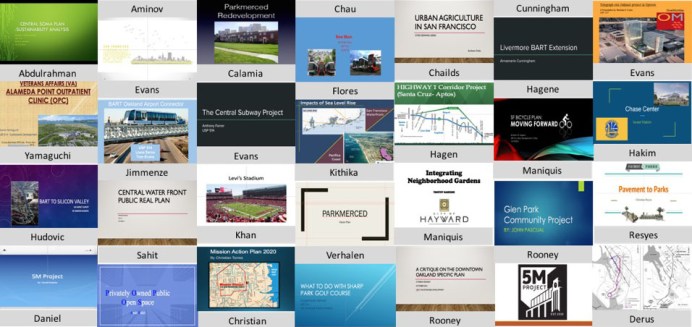
sust_all_projects

After reviewing so many development projects in the Bay Area and addressing main sustainability challenges across all of them. Write, (in no more than 400 words), your overall assessment of the main issues or challenges that are common across these projects. Think of the overarching themes not specific details. What is actually not working and how to make it better?
Be precise and do not exceed the word count.

(Sustainable Development in Cities, USP 514 Class Discussion)

Sustainability on the Building Scale

1-slide-001

You are hired by the government as an auditor to assess the viability of the LEED citification, and if they should continue or stop using it. Select two similar buildings one is LEED certified and the other is not certified. Compare and contrast their overall environmental performances and end with a paragraph of main recommendations for the building with less environmental compliance as per your assessment.

(Sustainable Development in Cities, USP 514 Class Discussion)

People & Sustainability

2016_09_19_3-usp514_sfsu

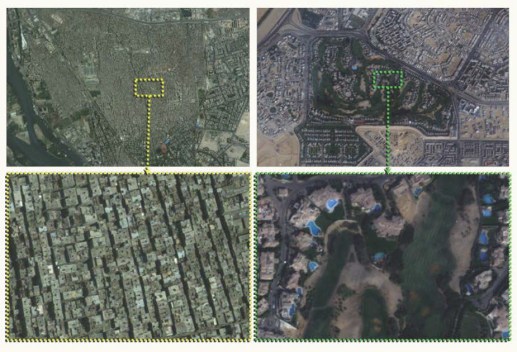
Two contrasting urban fabrics in Cairo, Egypt

People shape their cities in many ways and on many scales. Describe how socioeconomic factors can shaped the built environment from the entire city to the single public space.  Discuss the most relevant example from the class/reading material and bring your own example from your own experience and observations

(Sustainable Development in Cities, USP 514 Class Discussion)

Evolution of Urbanization & Sustainable Development Concept

Picture1

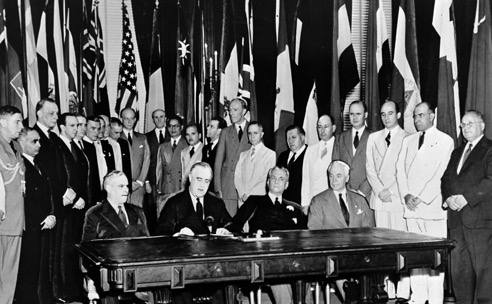
When: January 1, 1942, Who: representatives of 26 nations   |   Where:  Washington DC  |  Action: Signing the Declaration of the United Nations   |   Official Declaration: 24 October 1945

In the urbanization process through human history, sustainable development is a concept that was introduced recently. Write your own definition/understanding of the concept and why the current definition by the UN (our common future report) may be insufficient. And then mention the top milestones in the evolution of urbanization process and why do you think these are the ones that influenced the development process more.

(Sustainable Development in Cities, USP 514 Class Discussion)

#Sust_Glob_South

The Adaptive Reuse as a Sustainable Solution for Heritage Buildings in Historic Cairo | Egypt

By: Waleed Shehata

___Picture1Historic Cairo contains possibly the finest and best surviving collection of more than 600 listed building, as well as its preserved urban fabric. Sorrowfully, sixty or more years ago, Cairo’s historic quarters have started facing deterioration symptoms. The long government neglect resulted in squatter settlements, diluted infrastructure and informal industries. This situation together with poor public awareness toward the value of heritage contributed to severe deterioration conditions for years. Despite dedicating a huge financial resources from the local government and international organizations the preservation, restoration and protection of historic Cairo’s monuments extend far beyond saving, or even restoring bricks and mortar for tourists. With conservation of the authentic fabric in mind, the adaptive reuse of Cairo’s heritage buildings is a recommended strategy for integrative revitalization and urban development of the historic city.
In architectural heritage conservation, adaptive reuse refers to the appropriate functional conversions of heritage buildings to suit the existing use or a proposed use. “The fact is that the best of all ways of preserving a building is to find a use for it, and then to satisfy so well the needs dictated by that use…”  Viollet-le-Duc, 1854. The function is the most obvious change, but other alterations may be made to the building itself. Adapting a valuable building for reuse can include intensive exterior and interior modifications that are purely aesthetic and/or functional; such as the circulation route, the orientation, and spatio-physical relationships. In some cases the process of adaptive reuse may exceed the boundaries of the existing structure, or it may even necessitate the construction of an annex building depending on the peculiarities of the project. In other words, adaptive reuse includes any intervention to adjust, upgrade, introduce new services and uses to suit desired functional requirements, while safeguarding the place. The process itself should be applied to the building while retaining its structure, character, original identity and general authentic significance for future generations.

Thus, adaptive reuse of heritage buildings does not only step up the maintenance of the structure and delay its decay, but it also allows the functioning building to get involved in the living context it lies within, unlike buildings that are deserted and disused.

Urban Forest of Africa | Johannesburg, Lagos & Cairo

By: Joe McBride
Slide37

The urban forests of Johannesburg, Lagos, and Cairo were surveyed to provide a data base for a comparison of their composition, structure, and condition.  Tree species diversity in these three urban forests was compared to the species diversity of trees in each biome in which the city occurred and to climatic parameters of each biome to measure the correlation between urban forest characteristics and the characteristics of the biomes.  Structure of the urban forest was examined in relation to historical precedents for urban design in each city.  Current problems of urban forest condition and management are discussed.

To obtain a copy of the presentation, click on the link below:

Urban Forest of Africa (Johanesburg, Lagos & Cairo)

Building Authenticity in the Landscape | Hawaii

picture1

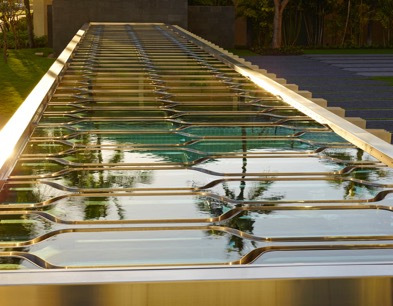
Inspired by the existing modernist façade, the new courtyard at IBM Victoria Ward tower showcases a landscape expression of modern Hawaiian architectural motifs and powerful cultural history. The  historic IBM tower was designed by Vladimir Ossipoff—Hawaii’s quintessential modernist. The new landscape is a distilled expression of Hawaiian identity and serves as an introduction to a larger mixed-use master plan of over 60 acres in central Honolulu.

Sustainability of Buildings in Nuweiba Village, New & Ancient Building Techniques | Egypt

By: Mamdouh Sakr

PastedGraphic-1

One of the project’s clusters after the external plastering (still under construction)

Introduction

Architecture students and architects in Egypt and elsewhere seldom have the opportunity to study and understand the various techniques of Earth Construction. The majority of the architectural educational systems ignores such a topic completely, and restricts it to anthropological studiesThis severe neglect of teaching the ancient yet sustainable building techniques is contemporaneous to a ruthless erosion of the Egyptian vernacular architecture, with all its architectural elements, decorative motifs and structural techniques.

Nowadays a number of projects are trying to benefit from the timeless building techniques and local materials to create sustainable, environment friendly and economical buildings.Most of these trials are a direct result of the efforts of Hassan Fathy, the late Egyptian architect who spent his entire career looking for and developing means of rebuilding communities that would allow people to live with self-respect despite their economic status.

The Project… The Idea

I was asked to design a touristic camp on a piece of land north of Nuweiba, which is a coastal town in the eastern part of the Sinai Peninsula, Egypt. An area, which is well known for its numerous “Bedouin-Style” camps, where tourists stay in cheap huts made of palm reeds and recycled plywood boards.

The “Bedouin- Style” hut seemed like a nice idea that has been abused by bad taste and limited budgets, and what started as an environment friendly, economical and aesthetically pleasing simple lodge turned to be an ugly ramshackle heap of different materials. After almost two decades of labeling the area as a “Hippie paradise”, things changed for a number of reasons and a camp composed of huts would never generate any income or even sustain the ownership of the plot. Sothe owners of the camps were obliged to build permanent rooms in addition to the simple huts.

The owner who was mesmerized by the beauty of the site wanted to respect the environment and create buildings that enhance the visitors’ experience of the sea, the desert and the mountains. The piece of land had a narrow frontage on the beach (90 meters), and this required a different design approach than the typical spreading of the rooms in rows parallel to the shoreline.Therefore the design gradually developed as a number of rooms clustered around courtyards that varied in size and form. These room clusters were placed organically in the natural desert landscape, ensuring natural lighting and ventilation to every unit.

Building Materials and Techniques

The use of natural materials and traditional building techniques was the main criterion, which influenced and guided the design of the camp. The available building materials in the site and the region were: stone shingles, silt, gravel and sand. Apart from these materials anything else had to be brought from the cities of the Nile Delta (almost 350 km away).

As the local volcanic and granite stones radiate large quantities of heat, they were unsuitable to build living spaces, but were easily used tobuildthe foundations. The presence of good-quality silt and sand encouraged the use of adobe, where only dry straw was needed to strengthen the mixture. So it was decided that adobe will be prepared in site, and used to build the walls, and the question was what will be used for the roofs. Unfortunately using reinforced concrete to create flat roofs became the norm in Egypt that most of the architects and clients do not even think of other options. I was trying to provide other environment friendly alternatives, however using wooden joists would not be that appropriate, as the materials, its preparing to withstand the harsh climate and the skilled labor involved would be extremely expensive. While I wanted to use adobe domes and vaults for environmental and aesthetic reasons, fortunately the owner accepted the idea because of its economical advantages and the overall ambiance, which would appeal and attract tourists visiting the camp. So we were simply using natural building materials and reusing Ancient Egyptian building techniques in the 21st century.

The Architect and the Mason

I can claim that earth building construction and traditional building techniques depend on the experience and ingenuity of the mason more than the creativity of the architect. The masons deliberately made some slight modifications, such as the sizes and location ofsome of the alcoves and a few decorative brick formations, where they felt that their modifications added a distinctive flair to the buildings.

I believe that such flexible relationship between the architect and the masons is peculiar to the earth building construction and is rarely present in the conventional building processes. This remark might raise an important question, whether these buildings are considered examples of “Vernacular” or“Neo-vernacular architecture?