Government Failure in Providing Housing Solutions for Urban Poor | Kenya

Unknown
By: Brandon Alexander Harrell:

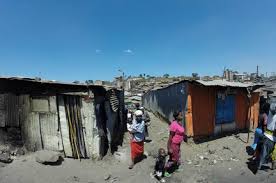
Government Failure in Providing Housing Solutions for Urban Poor in Kenya: According to UN-HABITAT, Nairobi has some of the most densely populated, unsanitary and insecure slums in the world. About 60% of the city’s population lives in the more than 100 slums and squatter settlements around the city. The excessive and expansive slums which pervade Nairobi’s periphery serve as proof of a history of turbulent governance and the consequential housing market failure. The market failure can be attributed to poor governance, high cost of housing finance, a complex land tenure system, stringent planning and building standards, and rapid urbanization compounded with poor economic growth. The lack of affordable housing options for low-income and no-income residents of Nairobi is particularly important due to the fact the new Kenyan Constitution 2010 guarantees every Kenyan the right to decent affordable housing. An estimated 60% of Nairobi’s 3 million person population are low-income, urban poor living in slums which constitute less that 5% of the Nairobi’s total land.  As these slums continue to grow due to a migrating rural populations and internal natural population growth, it is in the interests of Kenya, and the entire Horn of Africa, to see to it that the urban poor are housed.

Our analysis of the various housing interventions spearheaded by the (Government of Kenya) seeks to highlight their strengths and weaknesses and to suggest ways in which they might be improved to ensure maximum benefits, especially for the poorest of the poor. Such projects include: Kenya Slum Upgrading Project currently under way;  Umoja II and Dandora Site and Service schemes and Pumwani- Majengo resettlement; Kibeta High Rise.

What we find is that the GOK has failed to provide access to affordable housing solutions and instead, all interventions by the government to improve access to housing have ended up benefiting the middle and upper-middle income classes. Historically, these programs have failed due to mismanagement and corruption, and lack of political will to provide jobs and resources for the ever growing low-income population.Through an analysis of changes in housing policies, cost-effectiveness of housing projects, level of public/ private partnership (PPP), we hope to shed light on the current trends in slum upgrading and on future possibilities. Alternatives to explore include project management of PPP in the production of low income housing, NGO intervention and community led housing production/upgrading.
Snippets from Nairobi | Kenya

PastedGraphic-2

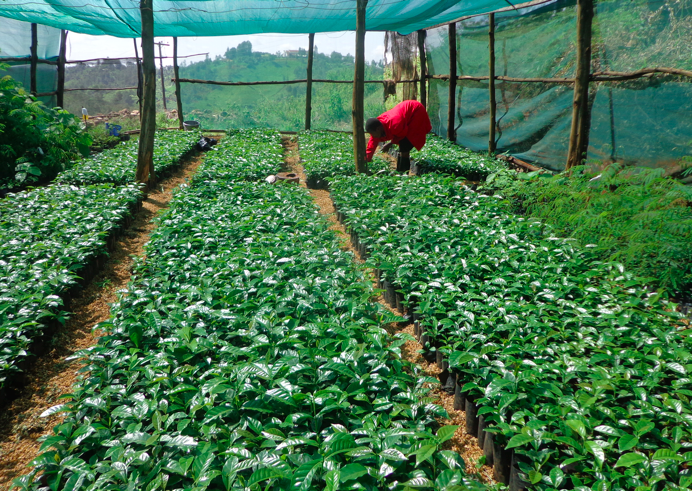
Nescafe Plan Farmers’ Nursery – Karatina, Central Kenya

One of the key factors for rural development is the sustainability of its farmers. Countries whose farmers have invested in education and technological knowhow have progressed at a much faster pace and as a result have grown economically stronger and sustainable. Having had the experience of working with rural/ farming communities across two continents – Asia and Africa, I can say with confidence that farmers in Africa, especially in Kenya are more conscious of improving their lot. In my extensive interactions with coffee farmers across central Kenya, ranging from small to medium sized farmers, all had one thing in common; all of them are educating their children. No doubt that there is strict implementation of Universal Primary Education across Kenya, which helps in ensuring that children acquire basic schooling. But when a struggling farmer proudly tells you that his daughter is studying in the Nairobi university for a degree in Agriculture sciences, you know that it requires a higher level of consciousness and vision. This reflects the hope of a nation that sees value in equipping its future generations with skills that will ensure a sustainable source of income generation.

Sustainability has many facets which play an equally important role in making our planet a better place to live in!

By: Unjela Kaleem

Greening & Opening the Banks of the Nile, Cairo | Egypt

PastedGraphic-1

Picture taken from the Nile in Cairo looking at its western bank, Nov2013

The Nile, in general, and particularly in Cairo, is an ecological, cultural and social corridor that is not yet fully utilized. The 2011 Cairo workshop “Connecting Cairo to the Nile” identified the potential to increase accessibility to the river, suggested longitude trail system, proposed connecting the waterfront with adjacent neighborhoods and proposed expanding the ferry system. I studied a 2-km reach of the east bank in Maadi, a wealthy suburb about 10 km upstream of the city center, with relatively greener banks, availability of resources at the district level, higher awareness of local residents, physical setting allow for banks re-use, existence of community organizations (i.e. Tree Lovers and Midan). Findings of fieldwork and interviews show that: (i) species of native vegetation found are Phoenix Dactylifera, Jacaranda, Cortedarea and Papyrus alba; these are concentrated in 115 meter in southern part of the study area. (ii) Public access was categorized into: public space (accessible), private or semi-public space (accessible with conditions), and prohibited (inaccessible). Along this representative stretch of the Nile, the public access was limited to 16%, the private or semi-public makes 29% and the prohibited zones are 55%. (iii) Boating operations found to be in three categories, floating hotels (Nile cruises), motor boats (including ferries) and sailing boats, all are scattered along the banks without an overall plan or organization, which affects water flow and block public access to the banks. To better develop the banks, I recommend (i) maintaining existing riparian vegetation and expand it to other areas with healthy banks or planted nurseries, (ii) connecting open public spaces to create a pleasant walking trail along the banks in addition to improving public access by relocating government buildings (such as the police or military facilities) and facilitate access to the river for general public, (iii) reducing the anchoring points to two locations and redistribute boating operations to group all motor boats to use the ferry anchoring points and all the sailing boats to use Al-Yacht club marina.