Social & Spatial Justice

peopleunited2

Harvey’s chapter brings in the spatial dimension to capitalism and market trade. He also brings the working class into the discourse. In one page, using the example from the US or France, summarize his views on capitalism and its relation to spatial injustice. In your second page explain the main forces that Soja believe derives injustice and how? Then, in your views and according to their importance, rank the four approaches (by Haughton) to achieving just sustainable urban development and why do you ranked them in this order of importance.

#Env_Plan

Urbanization & Deforestation

city-leaf-1In chapter 15 Tom Rough shared two ways in which urban growth derive deforestation. In conjunction with Barbara Torrey’s paper, describe these two drivers and, as expert in the field, how would you advise or suggests reforms to reduce this deforestation process. Also add few lines on urbanization factors that were not mentioned in the text. (in one page). In your 2nd page, and based on Roger Keil’s research about global cities network and the research presented in class by Ronal Wall, identify the top one or two social and/or economic factors in the city that you believe highly influence, shape and derive the spatiality and inter-urban network.
#Env_Plan

Social & Ecological Resilience

resiliency

The article by Adger connects ecological and social resilience. In one page, summarize the most significant take-aways of his article and what is the thing you strongly agree with and mention one thing you completely disagree with. In your 2nd page –in conjunction with Adger’s article + the UN report– if our existence and well-being is very connected to the ecosystem where do you think the main challenge is in resolving the environmental problems the world is facing.

In addition to the two pages, please add 3 lines summarizing your take on the video we watched about “Saving endangered species / saving the planet”

#Env_Plan

City Vs Country: The Urban-Rural Continuum

Picture1

Urbanization is a trend that will continue to occur as an ongoing process. The urban rural continuum is a complex one that has the city at one end and the country on the other. According to discussion in class different settlements can be placed on any point on this continuum; and the factors that dictate where the settlement may fall on this urban/rural continuum do change form a place to another and a settlement to another. In the case of Chicago, and according to Cronon, describe in one page the factors that contributed to its transformation on the urban-rural continuum. These can be: locational, social, economical, infrastructure, transportation, and many more. You may upload photos or diagrams to illustrate your ideas.

In your 2nd page, and based on the Robert Mugerauer chapter, focusing on the city only, elaborate how tourism influence the development of the city and if it actually contributes to further urbanization within the same city.

‪#Env_Plan

Environmental Movements

paloma-environmental-movement-1Environmental Movements (EMs) are viewed to be a subset of the New Social Movements (NSMs) theories. In one page, identify the areas of similarities and differences between the EMs and NSMs and why would you agree or disagree with that notion?  In your 2nd page, select an example of your choice and describe the three frameworks of analysis for the Environmental Movements following the examples provided in the work of Doyle, Timothy. Your example should be different form the ones mentioned in the six countries in box 1.2 page 7

‪#Env_Plan

History of Environmental Planning

Picture1

According to the lecture in class and the readings, the evolution of the environmental planning have gone through many eras. In one page, summarize each era highlighting its major characteristics, key players and specific milestones lead to change. Then, in your 2nd page, indicate where do you stand in the conservation/preservation argument? and why? Lastly, Gifford Pinchot and John Muir had very different approaches, highlight briefly what are the common values that they both shared.

‪#Env_Plan

Vision Statement

Vision

From your previous professional experience, academic studies, engagement in local community and readings beyond the classroom, write in no more than 140 words your vision statement as an environmentalist or an environmental advocate. Highlight how do you the future of environmental planning and your expected role as a landscape architect. 

Global Sustainability

picture1

There is a number of challenges and obstacles to achieve sustainable development goals. Select one of the SDGs that you see as most pressing and identify the obstacles that may prevent from achieving it. Explain these obstacles challenges demonstrating your understanding of how they connect to sustainability on global scale.

The implementation of Sustainable Consumption & Productions (SCP) helps to achieve overall development plans, reduce future economic, environmental and social costs, strengthen economic competitiveness and reduce poverty. In the light of the SDG you selected, and among the 4 policy instruments we discussed in class, what are the top two policy instruments you would use to overcome the obstacles of your selected goal? (select only two policy instruments)

(Sustainable Development in Cities, USP 514 Class Discussion)

#Sust_Glob_South

Sustainability of the Natural & the Built Environment


____kruger15500008

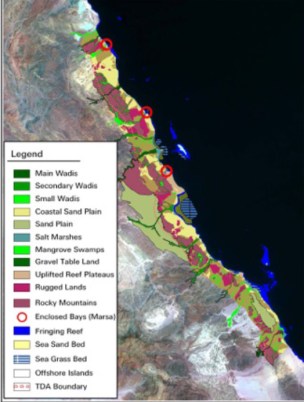
Homogenous Environmental seb-Zones. Part of a land suitability exercise along the Red Sea coast

Sustainability in both the natural and built environment is a major issue facing policy-makers, planners, developers and designers. There is no project, neighborhood or city that have yet achieved the right sustainability balance (the 3 Es). The assessment and exploration of existing built forms allows us to learn more about weaknesses that can be enhanced and improved in future projects, plans and designs.

(1) Based on the lecture and discussions in class, please write a single page introducing the most significant environmental components influencing the area you live in. Give examples of how such factors interact with or influence people’s life.

(2) In one page, mention and explain two major elements of the built environment that are crucial to sustainable development but not implemented properly in your area and will impact people’s quality of life.

(Sustainable Development in Cities, USP 514 Class Discussion)

Evolution of Urbanization & Sustainable Development Concept

Picture1

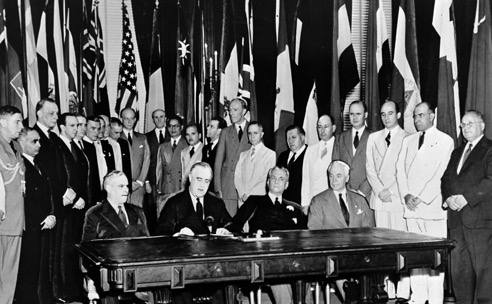
When: January 1, 1942, Who: representatives of 26 nations   |   Where:  Washington DC  |  Action: Signing the Declaration of the United Nations   |   Official Declaration: 24 October 1945

In the urbanization process through human history, sustainable development is a concept that was introduced recently. Write your own definition/understanding of the concept and why the current definition by the UN (our common future report) may be insufficient. And then mention the top milestones in the evolution of urbanization process and why do you think these are the ones that influenced the development process more.

(Sustainable Development in Cities, USP 514 Class Discussion)

#Sust_Glob_South

Solutions for people to erect affordable, stable and sustainable homes | Pakistan

“Earth Home Project” investigates the rising challenges Pakistanis in rural areas have to face. The focus is on trying to find applicable solutions for people to erect affordable, stable and sustainable homes. Architecture plays a crucial role in finding new ways of designing by incorporating local materials and building techniques, thereby minimizing not only the cost but most importantly the reliance on the economic situation. The project started in Pakistan in 2011, initiated by Irshad Balouch, as a direct response to the flood that devastated his country during the summer of 2010 and the lack of support people in rural areas where given following the loss of their land. For most it is strictly impossible to build their houses on their own; the inflation in the cost of basic building materials forcing those able to acquire a loan to take on life-long debts often resulting in the loss of their land. The goal of the project is to acquire, develop and spread the necessary know-how required to build stable constructions, by involving residents of flood affected areas into the process of rebuilding their houses, accompanied by skilled craftsmen, employed by the project, and neighbors, there on a voluntary basis. The project (thanks to donations) is able to cover the unavoidable expenses of some basic building materials such as concrete and burned bricks for strong foundations, wood for window and door frames as well as basic tools. Locally sourced materials such as earth, straw and bamboo, contribute to the sustainability of the design since they are highly accessible, do not require heavy machinery, and empower people by virtue of those materials being relatively easy to acquire and handle. Sustainability, understood as an environmentally as well as socially responsible answer therefor becomes the starting point for the type of architectural thinking at the heart of “Earth Home Project”. Architecture can do more than just provide blueprints for prepackaged products of consumption if it integrates the process of construction and the production of materials as an integral part of what defines it. The hope is that this will enable the community to be more prepared against future disasters resulting from climate change. They will be able to rely on their neighbors and their own abilities to build up their life despite the cruel and unjust conditions of the economy which is pushing many into desperation and towards the margins. So far the endeavor has been able to help raise 121 homes around the area of Multan, which had been very badly affected by the flood due to its position in the Indus river basin.

By: Amandin Richard