Sustainability of Lower Lempa River (Bajo Lempa) Region | El Salvador

By: Jamie Pounds Stanton & Tom Stagg
PastedGraphic-1

PastedGraphic-2

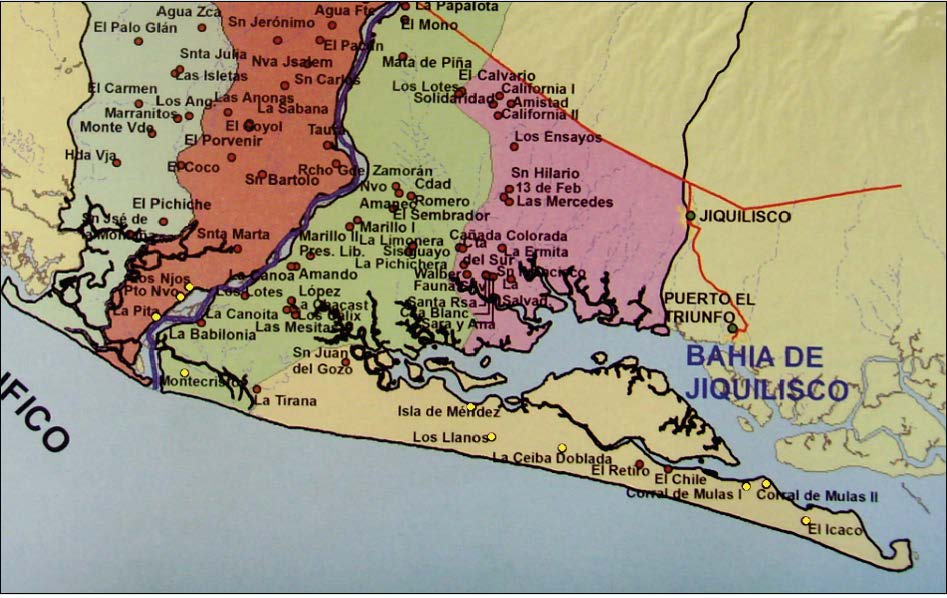
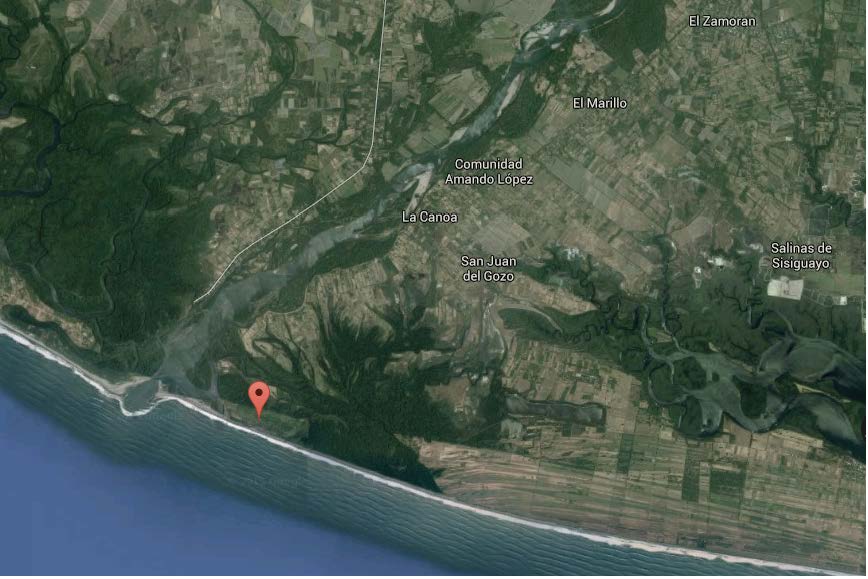
This study in El Salvador aimed to determine the feasibility of strengthening and expanding a local resource management plan, the Plan Local de Aprovechamiento Sostenible (PLAS). The Bay of Jiquilisco and the surrounding mangrove ecosystem in the Bajo Lempa is a UNESCO-designated biosphere reserve and a Ramsar wetland valued both for being a large carbon sequestering ecosystem and rich in ecological variety. Further, the nearby communities rely directly on resources from this ecosystem for their livelihood. However, degradation of this ecosystem is threatening both the sustainability of the environment and the livelihood of residents.

Aiming to assess the broader social characteristics of this region, we identified four variables as important to the implementation of local environmental resource conservation policy: effective communication structures, community ownership of the policy, relative economic stability in the region and access to alternative markets and resources.

We conducted 76 household surveys and held over 10 hours of semi-structured interviews, the community leaders and citizens alike stressed the importance of sustainable regulation of their ecosystem. They value the mangrove ecosystem and know intimately that without proper conservation efforts, they cannot continue to survive as communities. Unfortunately, we also found that over 80% of community members in communities where the PLAS has been implemented are unaware of the regulations dictated by it. Additionally, 92% reported that there were no locations where they could acquire alternate materials to sustain their livelihoods. In addition, it was widely reported that enforcement, as well as monitoring and evaluation, was insufficient. Both the community leaders and the forest rangers expressed a need for increased resources, such as technical assistance and funding to train and employ more rangers, and for supplies as simple as uniforms.

We recommend supporting the expansion of the PLAS, but have identified key areas that need improvement where PLAS has already been implemented; if these issues are not addressed, they will also limit conservation efforts in new communities. Community education and investment in monitoring and evaluation are two areas where we are focusing our recommendations. A third recommendation underscores the need for support of established cooperatives in fishing, shrimping, and dairy production, among others. Our survey confirmed a very low level of income in the Bajo Lempa, with 62% of households surveyed stating they did not have dependable work, and 34% reporting a monthly income of $0. Improving the economic conditions in the region can relieve some of the burden of the mangrove ecosystem system as a provider of food and building materials.

Sustainable Design, Case Study – SmartCity Kochi | India

PastedGraphic-8

SmartCity Kochi is a project of TECOM investments (SmartCity Dubai) in association with the State Government of Kerala in India. The project marks the next step in the evolution of an international brand of IT Campus projects focused on creating high-quality workplaces for international knowledge industries.

In Kochi, Smart City is located on a one square kilometer riverfront site with some extreme topography and some extreme environmental challenges. By definition, sustainable design is a central theme in the planning and design of the site, in keeping with the brand name “SmartCity”, and its international profile and appeal. Robert Marshall, Global Director of Planning & Landscape for B+H Architects, has been leading the design and planning of the SmartCity Kochi project and will discuss some of the challenges, issues and opportunities associated with the design of a sustainable high-tech campus in southwest India

Conflicting Visions of Sustainable Development: Struggles over the Production of Eco-Cities in Dakar | Senegal

IMG_0323

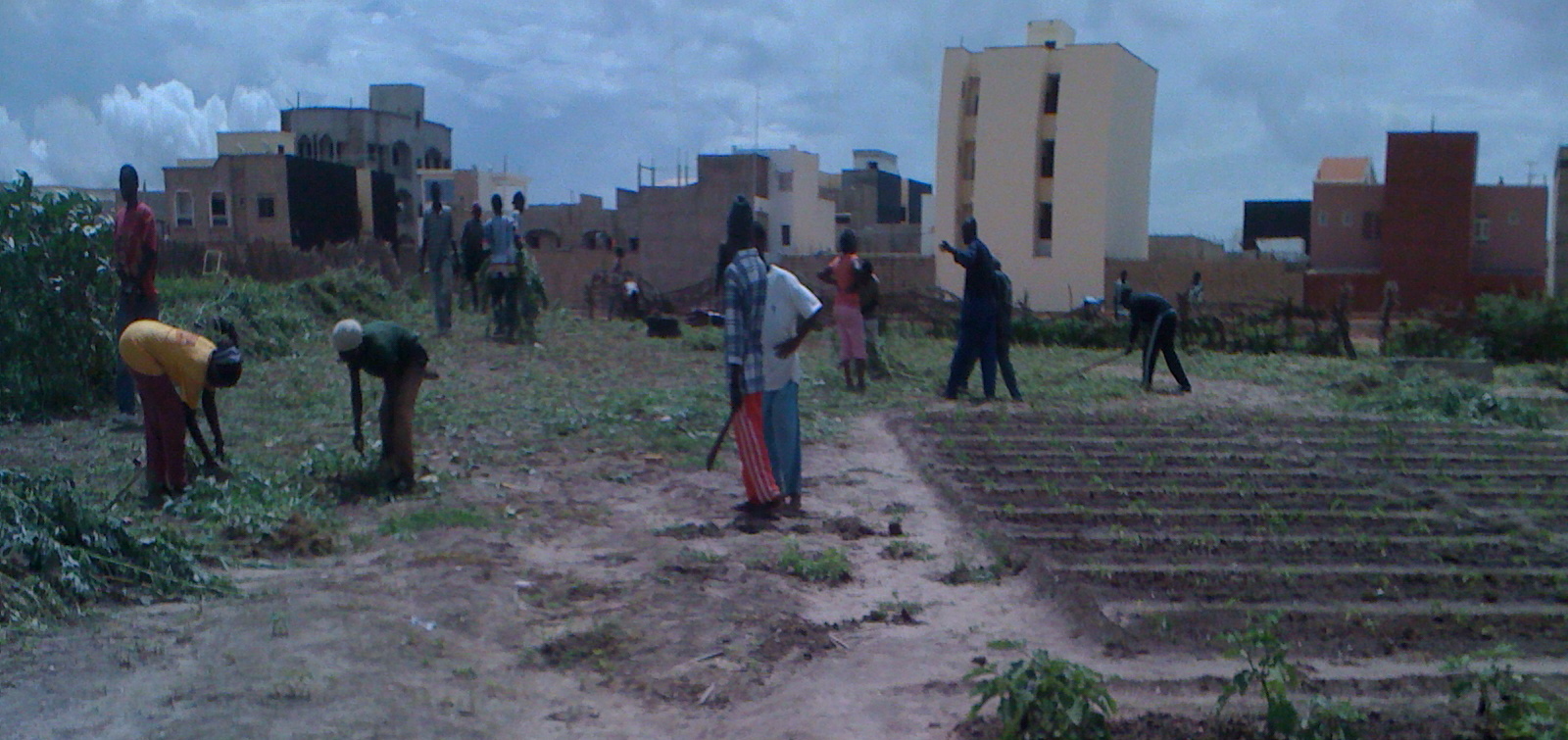
The concept of sustainability has been invoked to advocate a wide variety of environmental and economic development projects. Most recently, calls for the ‘sustainable development’ of urban centers in the global South have sought to address environmental and social problems associated with informal housing settlements. This presentation examines debates –among a variety of public and private actors- over how to counteract the proliferation of informal housing settlements and manage natural resources in Senegal’s rapidly urbanizing Dakar Region. In doing so, I draw from ethnographic research and textual analysis to examine conflicts that have developed over how sustainable development should be practiced in urban Dakar. Through an examination of several conflicts that have developed from recent efforts to plan and construct ‘eco-cities’, I argue that actors are struggling over a/how to best preserve urban farmland and floodplains and b/the extent to which middle-class and elite housing estates should be integrated into urban development strategies. In addressing the outcomes of these struggles over sustainable urban development, I contend that these conflicts are reconfiguring Dakar’s urban landscape and increasing urban poverty and inequality.

Urban Growth, Heterogeneity and Activism in Mexico’s Cities | Mexico

PastedGraphic-1

Most often, sustainability is associated with questions pertaining to the natural environment or, in the urban context, with ways to mitigate the problems associated with rapid demographic growth and its associated troubles. But how might the concept of sustainability help us frame questions of racial, ethnic and cultural belonging in today’s rapidly expanding urban centers in the Global South? How is the articulation of ethnic and cultural identities amongst the growing urban indigenous population in Mexico a matter of sustainability? This talk will examine the experiences and mobilizations of Wixárika indigenous youth who are living, studying, and working in Mexico’s western cities of Guadalajara and Tepic. My ethnographic and archival research explores state and popular perceptions of racial belonging in these two cities and the challenges these imaginaries face. Specifically, this talk will discuss the ways that Wixárika university students and young professionals negotiate these perceptions, increasingly through forms of activism that assert the rights of indigenous people to be heterogeneous urban citizens. These acts of activism and visibility on university campuses, government buildings and private offices manifest a push away from observing racial alterity in cities as a relation of “negative difference” to one of “positive heterogeneity.”

Public spaces cause Regression or Progression!

PastedGraphic-1

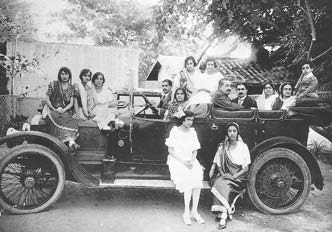
Karachi Clifton Beach 1960s

The good thing about social sites is that history, in one form or the other, is becoming more accessible to all. For example, people share decade old pictures of families and cities or advertisement via facebook or chain emails. These snippets from history give one a quick glimpse into the cultural and social fabric of that time. By this I don’t mean that by mere looking at pictures and adverts one can get a full understanding of societies. Nevertheless, these tiny doses of information do provide a window into the societal norms and prevalent cultures of that time. Looking at such images of Cairo and Karachi during the 60s and 70s, It was interesting to observe the extent to which these societies have regressed or progressed in terms of inclusiveness, diversity of religions, cultural norms, fashion, gender sensitivity, civic sense, and in their overall social thinking since then. The definition of modernity would of course vary depending upon which side of the fence you are looking from. However, there is hardly any debate on the fact that societies across the globe are increasingly becoming divided on the basis of religion and ethnicities. Besides many other reasons for such state of affairs, lack of public places and mixed-use physical spaces are some of the important reasons that play a direct role in creating polarization. Open spaces for recreation in big metropolises across the developing world are diminishing and as a result there is a growing tendency for violence amongst youth as a means to self expression. Karachi, once called the Paris of Asia, is now bracketed with war torn countries like Afghanistan and Iraq. Though, Cairo may not yet be there, but the way things are happening there, the times may not be too far. The deterioration in law and order results in gated communities and mixed use spaces become sparse. It is often seen that public spaces suffer neglect and results in abandonment when the affluent classes do not frequently visit such places. So, to what extent can we say that a lack of public spaces in mega cities leads towards regression in society? Is the current pattern of development sustainable?

A woman riding a motorbike in Karachi 196

PastedGraphic-3

           A Parsi family residing in Karachi during the 50

By: Unjela Kaleem

Government Failure in Providing Housing Solutions for Urban Poor | Kenya

Unknown
By: Brandon Alexander Harrell:

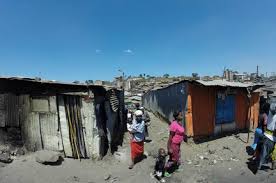
Government Failure in Providing Housing Solutions for Urban Poor in Kenya: According to UN-HABITAT, Nairobi has some of the most densely populated, unsanitary and insecure slums in the world. About 60% of the city’s population lives in the more than 100 slums and squatter settlements around the city. The excessive and expansive slums which pervade Nairobi’s periphery serve as proof of a history of turbulent governance and the consequential housing market failure. The market failure can be attributed to poor governance, high cost of housing finance, a complex land tenure system, stringent planning and building standards, and rapid urbanization compounded with poor economic growth. The lack of affordable housing options for low-income and no-income residents of Nairobi is particularly important due to the fact the new Kenyan Constitution 2010 guarantees every Kenyan the right to decent affordable housing. An estimated 60% of Nairobi’s 3 million person population are low-income, urban poor living in slums which constitute less that 5% of the Nairobi’s total land.  As these slums continue to grow due to a migrating rural populations and internal natural population growth, it is in the interests of Kenya, and the entire Horn of Africa, to see to it that the urban poor are housed.

Our analysis of the various housing interventions spearheaded by the (Government of Kenya) seeks to highlight their strengths and weaknesses and to suggest ways in which they might be improved to ensure maximum benefits, especially for the poorest of the poor. Such projects include: Kenya Slum Upgrading Project currently under way;  Umoja II and Dandora Site and Service schemes and Pumwani- Majengo resettlement; Kibeta High Rise.

What we find is that the GOK has failed to provide access to affordable housing solutions and instead, all interventions by the government to improve access to housing have ended up benefiting the middle and upper-middle income classes. Historically, these programs have failed due to mismanagement and corruption, and lack of political will to provide jobs and resources for the ever growing low-income population.Through an analysis of changes in housing policies, cost-effectiveness of housing projects, level of public/ private partnership (PPP), we hope to shed light on the current trends in slum upgrading and on future possibilities. Alternatives to explore include project management of PPP in the production of low income housing, NGO intervention and community led housing production/upgrading.